Don't miss out on having your voice heard |
Happy Spring Equinox!
Last week, a few of our staff members attended the Just Transition Summit in Juneau and this week others planned the April Earth Day Fair and an Adventure Borealis snowshoe hike. Read on for more information, thanks for being here. |
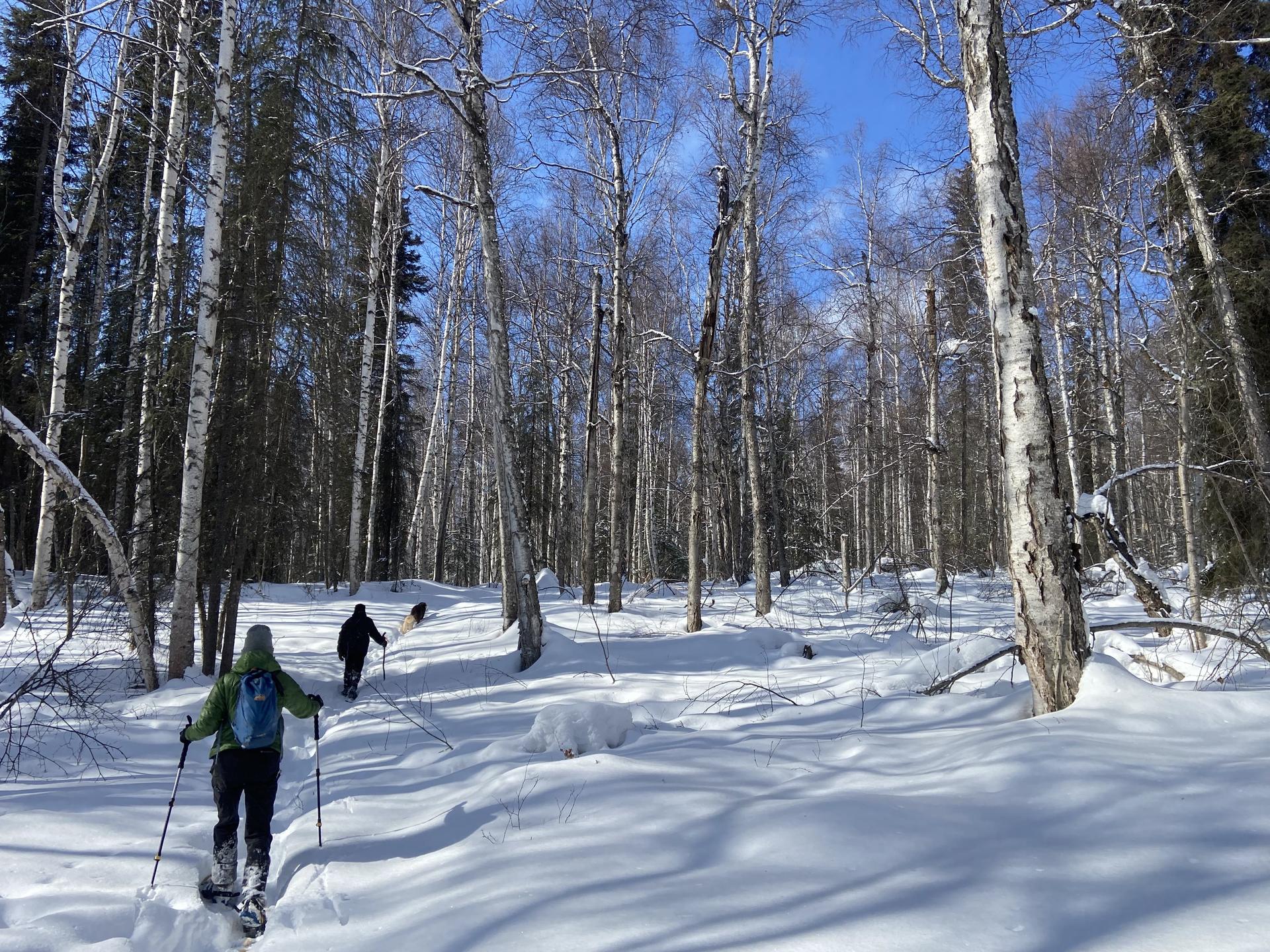
Join Adventure Borealis for a snowshoe hike around the Arctic Audubon Riedel Nature Reserve in Fairbanks on Saturday, April 13, from 11:00 a.m. to 3 p.m. Walking with snowshoes is a fun way to get outdoors in the winter, allowing you to go off-trail in deeper snow without sinking in. Explore the Reserve’s rich trails through unique boreal habitats of old birch stands, upland black spruce, and towering white spruce.
What to expect: - Beginner friendly and no experience necessary.
-
Depending on the group, we will likely cover 2-4 miles of rolling terrain with some inclines.
- Need to borrow snowshoes? Select "reserve snowshoes" during registration.
-
Limited to 10 participants, register here.
Adventure Borealis is committed to providing memorable adventures, ecological education and natural history exploration excursions in the Alaskan Interior for all people regardless of identity, age, ability, or socio-economic status. |
Comment now to protect the Macomb
caribou herd |
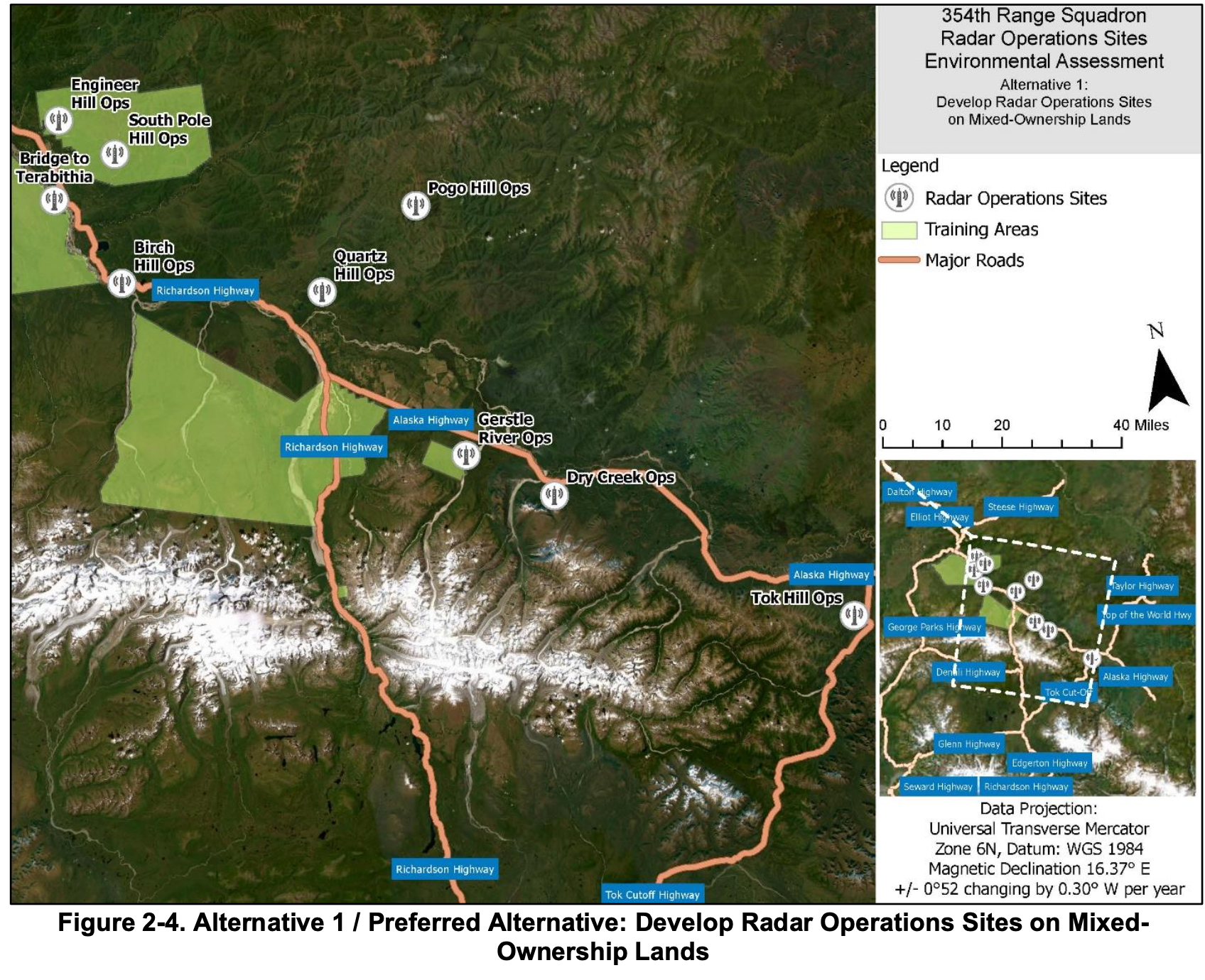
The Air Force is quietly planning nine new radar sites on federal, state, and Fairbanks North Star Borough lands throughout the Richardson and Alaska highway corridors. This proposal could have wide ranging and significant impacts on ecosystems, increase F-35 flights over communities, and add military and fuel truck traffic to highways already burdened by the (negative) trucking impacts of the Manh Choh ore haul.
One location in particular is raising concerns within the Dry Creek community. The proposed radar site would require a new road running up to the rim of the Macomb Plateau — a development that will have rippling effects for the community and the environment. The Plateau is a roadless area of the Eastern Alaska Range consisting of sub-alpine and alpine tundra that provides critical calving habitat for the Macomb caribou herd, which is in steep decline.
Along with the Macomb caribou herd, moose, bears, wolves, Dall sheep, wolverine, and many species of alpine-nesting birds all call the area home. The biodiversity of the Plateau makes it a destination for hunters, hikers, and wildlife photographers. With recent efforts to classify the Macomb Plateau region as a critical habitat for calving caribou needing additional protection, the proposed radar sites could have a damaging impact.
|
How can I help?
We encourage you to ask both the Air Force and the Alaska Department of Natural Resources for comment extensions and public meetings in affected communities, so the public has the time and opportunity to learn more about this complex proposal and provide comments. We also encourage asking for an Environmental Impact Statement, a more robust review than the current Environmental Assessment, to review and assess the potential impacts, particularly to local communities, water quality, ecosystem function, and keystone species such as caribou.
A copy of the the draft proposal can be found on the Eielson Airforce Base website under the tab: “ENVIRONMENTAL ASSESSMENT FOR THE CONSTRUCTION AND OPERATION OF AIR FORCE TRAINING RADAR SITES IN INTERIOR ALASKA.”
|
The deadline to submit comments to the Air Force is April 13. -
To submit a comment to the Air Force, email the Eielson Air Force Base Public Affairs Office at: 354FW.PA.PUBLICAFFAIRS@US.AF.MIL
- Comments to the State can be sent by
April 5 to Austin Michels (austin.michels@alaska.gov) at the Northern Region Office of the Division of Mining, Land & Water of the Department of Natural Resources.
*Please CC ryan@northern.org to share your concerns about this project with us as well. |
Dredging permit approved near Nome |
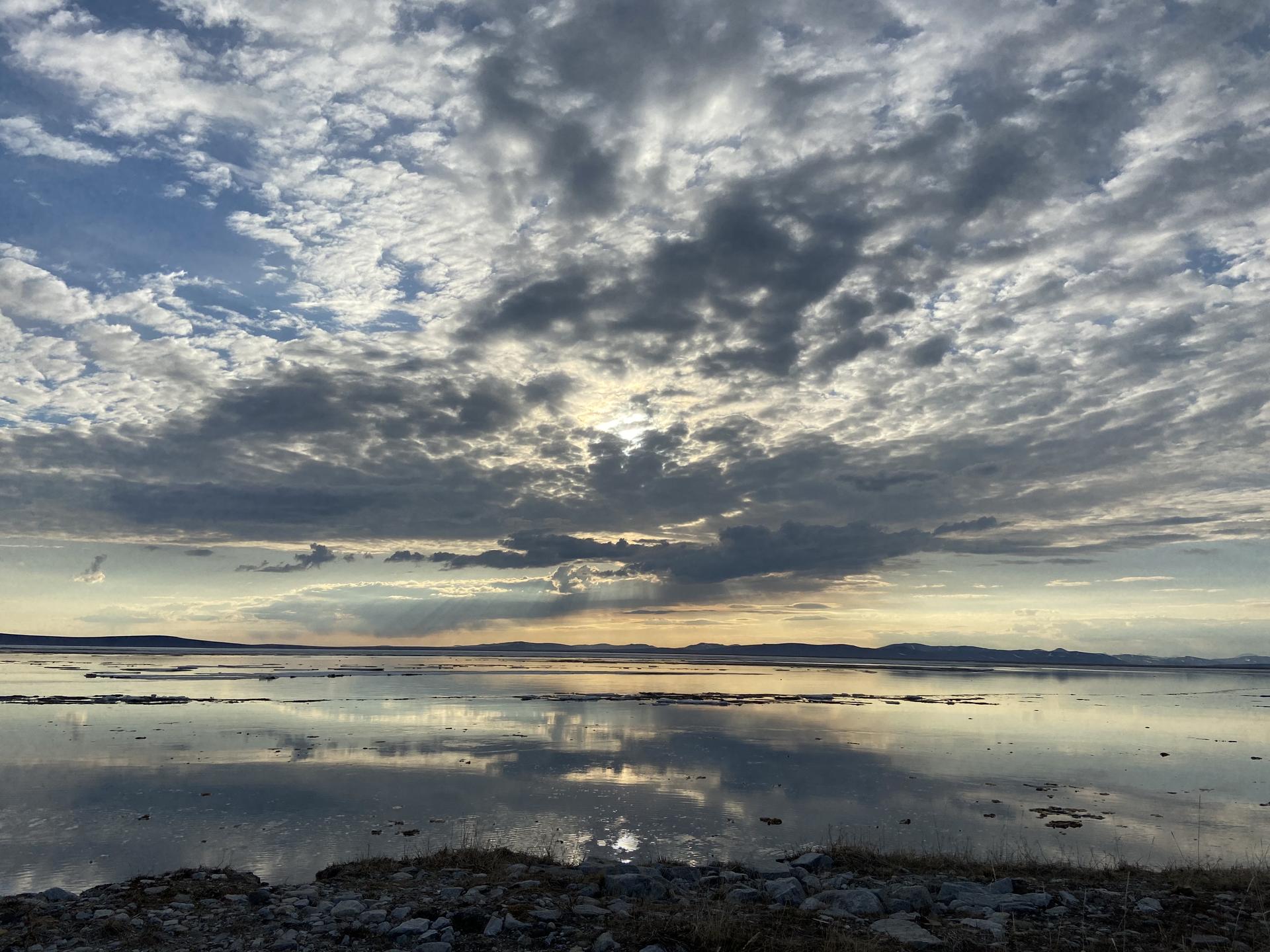
Photo by Katie McClellan, Mining Impacts & Energy Program Manager |
Last week, the U.S. Army Corps Pacific Ocean Division reversed a 2022 decision on a controversial mining project outside of Nome. The mining project, led by IPOP, LLC, has subsequently gained approval for a dredge permit for the Bonanza Channel, a waterway that feeds into Safety Sound.
The project has been the subject of broad opposition in Nome and across the Bering Strait region, as Safety Sound is an incredibly important habitat for fish, birds, and marine mammals.
Many locals depend on the area for subsistence throughout the year, and it is a popular hunting and fishing spot for non-subsistence users. Kawerak, a nonprofit tribal consortium in the region, opposes the project, as do multiple local Native villages, Alaska Native Corporations, and fishing organizations. Read more about the project here. |
Reflecting on our time at the Just Transition Summit |
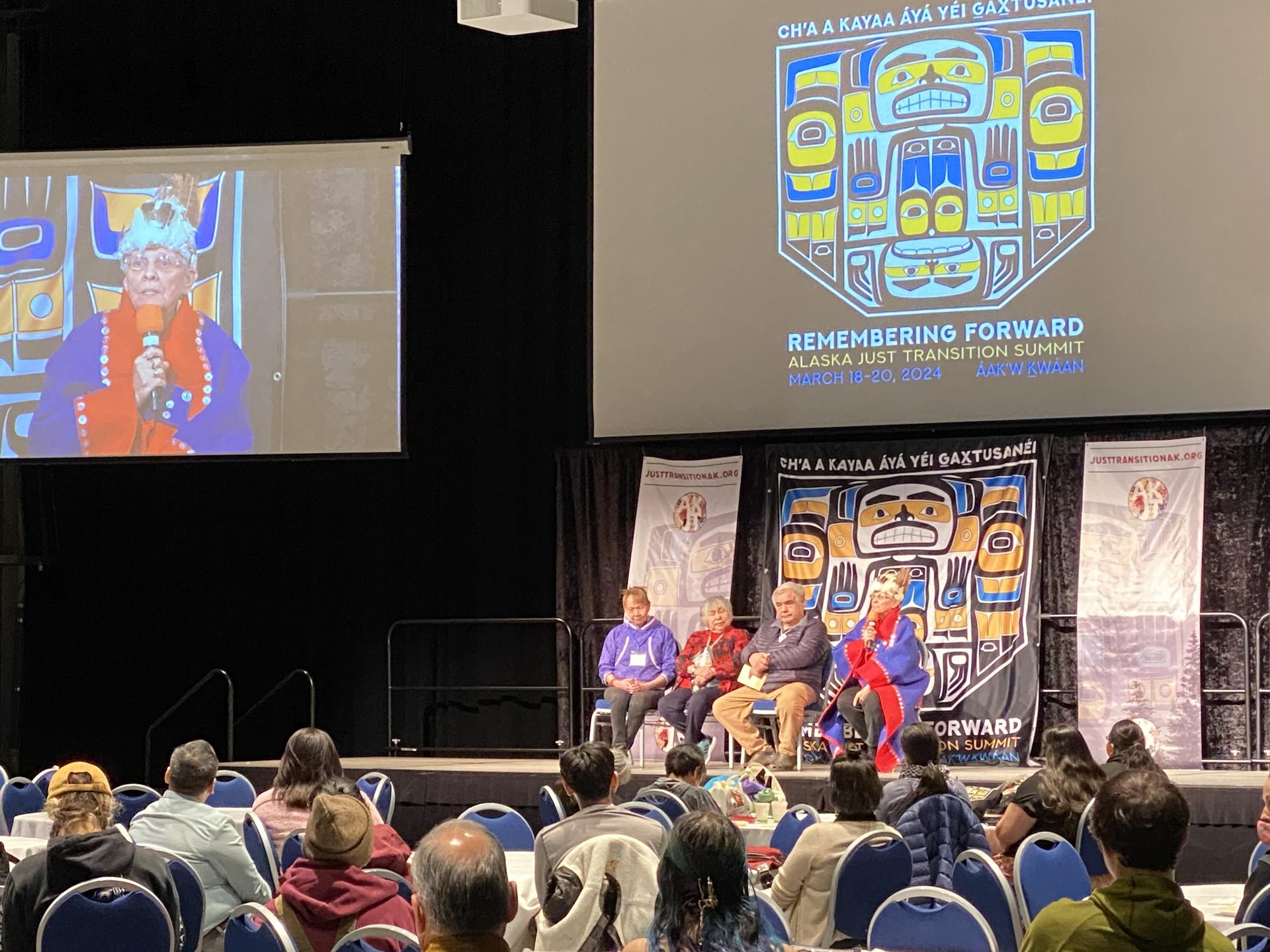
Photo by Emily Hikes, Mining Impacts Response Coordinator |
|
|
|
This was my first time attending the Summit and I felt an atmosphere of healing. The goal of the Summit was to “share knowledge, skills, inspiration, and connect about the equity and justice work in our communities”.
More than an hour was dedicated at the end of each day for elder reflections, which was my favorite part of the day. Having time to listen, unhurriedly, to the elders was healing as well as educational. From herbal medicine workshops to language learning moments (I got to learn the phrase, “Ch’a a kayaa áyá yéi gaxtusanéi”), the Summit brought a wonderful sense of “remembering forward”.
|
|
|
One take-away for me was the seriousness of the Yukon River fishery crisis. Every elder reflection, from communities all across Alaska, included some mention of this injustice. Alaska Native subsistence rights are being put LAST, in favor of commercial exploitation. I didn’t realize until this week what a social justice emergency is happening here in my own watershed. The commercial trawlers are wasting thousands of pounds of salmon as ocean bycatch, while villages on the Yukon haven’t been allowed to subsistence fish for five years.
Some other things I learned about: -
The Alaska Climate Alliance
- SB 114, a bill that would reduce the subsidies the state gives to oil companies.
-
The Renewable Energy Portfolio has a goal of making the railbelt 80% renewable energy by 2040.
- Ways to increase equality and dismantle white supremacy (franaba.com/).
-
Alaska Women Ascend is training Alaskan women who want to run for office.
So much more came out of the event, and I feel renewed, energized, and grateful to the organizers of such a wonderful experience. - Christin Swearingen, Manager of Donor Joy |
Now is your chance to comment on a proposed rule that would add three public members to the Federal Subsistence Board, nominated or recommended by federally-recognized Tribal Governments. This revision is an opportunity to see more Indigenous representation on the Board, helping ensure that there is personal knowledge and direct experience with subsistence uses in rural Alaska. For an easy guide on how to submit your written testimony, click the button below. |
On the outskirts of Fairbanks, Felix Gold is reassessing mine potential at the historic Grant Mine on Ester Dome. Currently focused on exploration, Felix Gold is looking to affirm 2021 drill results which showed a potential of 500,000 ounces of recoverable gold at the site.
This mine site is located directly adjacent to many homes and recreational trails on Ester Dome, and has a contentious history with neighbors who experienced decades of noise pollution, among other issues, from past mine operations. |
|
|
MISSION
The Northern Alaska Environmental Center promotes conservation of the environment and sustainable resource stewardship in Interior and Arctic Alaska through education and advocacy. |
|
|
Our Contact Information *{{Organization Name}}* *{{Organization Address}}*
*{{Organization Phone}}* *{{Organization Website}}* *{{Unsubscribe}}* |
|
|
|